Belgian Block and Decorative Stone Installation in Wolcott, CT — A Smart Alternative to Mulch
Reconsider the Annual Mulch Bed Refresh
Every spring it's the same routine. You pick up a few bags of fresh mulch (or order a delivery), top off the beds around the house, spread it out, and move on. It looks clean for a few weeks. Then the color fades, it starts to thin and somewhere in the back of your mind you file it away as something to deal with again next year.
You're not doing anything wrong. Mulch has been the default for so long that most homeowners never stop to question whether it's actually the right material for every application, particularly when used directly against the foundation of the house. It looks finished, familiar, and it's what the neighbors have.
But there's something looming…You may not have thought much about what's sitting against your foundation, but it is worth a closer look.
How Mulch Against Your Foundation Open’s the Door for Weeds
Left unaddressed, mulch beds against the foundation are a slow accumulation of risk that most homeowners don't consider until the damage is already visible. Mulch is organic. That's both its appeal and its limitation. Over time, mulch breaks down, and that decomposition process includes retention of moisture. When thick mulch beds are installed directly against siding, trim, or lower structural elements, they create conditions where prolonged dampness becomes a recurring factor. Mold, mildew, fungus, and decay begin to develop between the gap separating the mulch and the wall. This creates a breeding ground for weeds.
Topping off the beds annually is the standard response, but it means adding more organic material against the house each year, extending the same conditions rather than changing them. Over a long enough timeline, the costs of that cycle begin to accumulate , in the form of material, labor, and potential moisture-related repairs to siding or trim.
Belgian block and decorative crushed stone do not decompose. They don't retain moisture the same way that mulch does. And they do not need to be replaced each season.
Why Most Homeowners Stick With Mulch — and What SRT Landscaping Does Instead
Switching from mulch to stone feels like a bigger decision than it probably is. There's the upfront cost to consider, uncertainty about how it will look, and a general sense that it's more involved than a mulch refresh. It's easier to stay with what's familiar, especially when the problems are gradual and not yet urgent.
SRT Landscaping approaches these projects with a process that helps to alleviate any concerns the homeowner may have. Landscape fabric is installed properly beneath the stone bed to suppress weed growth from below. Stone depth is considered for long-term performance, not just appearance on the day of installation. Belgian block borders are set to create clean, lasting separation between the stone beds and the lawn, keeping material contained and giving the finished project a structured, architectural look that holds up over time.
For this project in Wolcott, CT, completed in summer 2025, all materials were sourced locally. The decorative stone came from Stockyard in Litchfield, CT, and the plantings were selected from Planters Choice Nursery in Watertown, CT. Local sourcing matters for quality and consistency. Stone from a regional supplier is selected for the conditions it will perform in, and plants sourced from a Connecticut nursery are already acclimated to the growing environment they're going into.
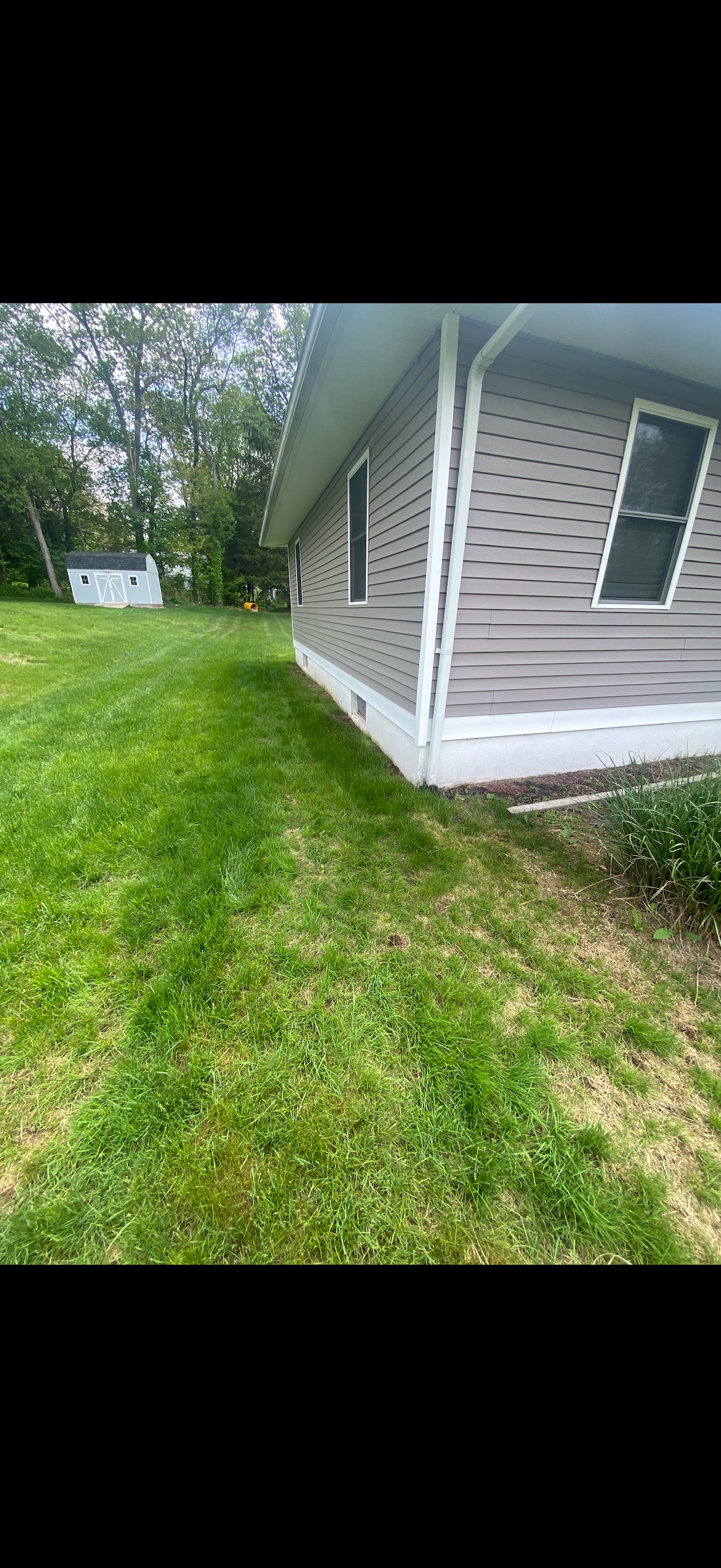
Before the Belgian Block Installation. Image is of the 2025 Wolcott, CT project.
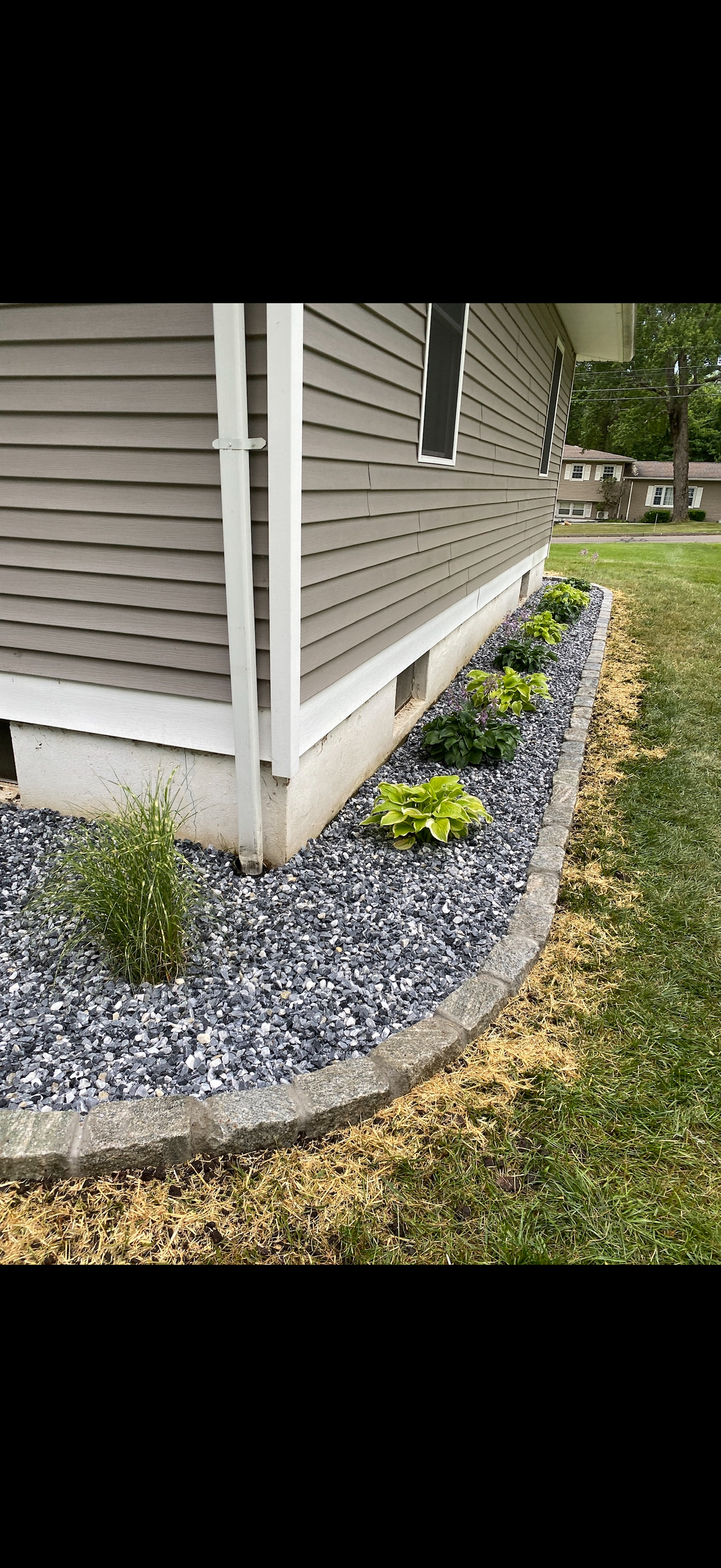
The finished product. Belgian block installation completed in Wolcott, CT in 2025.
What the Finished Project Actually Delivers
Belgian block does specific work in this kind of installation. It creates defined edges that keep stone from migrating into the lawn and soil from working its way into the bed. It provides visual structure that makes the planting areas look intentional and finished rather than soft and informal. Set properly, the Belgian block lasts. It holds its position and appearance for years without intervention.
Stone creates a cleaner drainage environment directly against the house. Where mulch holds and retains moisture, stone allows water to move through and away more freely. For Connecticut homes that see heavy spring rain, late-season wet periods, and freeze-thaw cycles through winter, reducing prolonged moisture contact against the foundation, siding, and trim is a meaningful practical benefit, not just a landscaping preference.
Weed growth is also suppressed. A properly installed stone bed with landscape fabric below and adequate depth on top creates a barrier that's significantly more effective than mulch over time. Alternatively, in regard to mulch, there are advantages in certain applications, particularly around trees and in deeper planting beds away from house itself. Mulch moderates soil temperature and retains moisture in ways that benefit plant root systems. Many homeowners end up with a hybrid approach — crushed stone against the house and along the foundation perimeter, mulch used selectively in beds where plant health benefits most from it.
What the Wolcott, CT project delivered was exactly that — a finished perimeter that looks polished and structured, performs better against the foundation than what was there before, and doesn't ask for the same seasonal investment to maintain. The plants from Planters Choice add softness and color without requiring the mulch bed beneath them to be pressed against the house. The Belgian block holds everything in place and gives the whole installation a clean, defined edge. Less mulch against the house means less maintenance for you throughout the year.
Does Maintaining the Beds Around Your Home Feel Like a Chore?
SRT Landscaping completes Belgian block and decorative stone installations regularly. These projects are straightforward in scope but specific in execution. The base preparation, fabric installation, stone depth, and block setting all determine how well the finished product performs and how long it holds.
A conversation with the SRT Landscaping team is the right place to start. The scope, the materials, and the timeline are all things that get worked out in that conversation, before any formal commitment is made.
The beds around your home should both protect the house and improve it. The right materials, installed by the right team, make both possible.